







Nutrition has become so complicated that people feel like they need a degree just to eat dinner. One day, carbs are the enemy, the next day fat is the problem, and somehow we are all still standing in the kitchen wondering what we are supposed to make. That is why the newly released 2025 to 2030 Dietary Guidelines for Americans actually caught my attention. Not because they are flashy or groundbreaking, but because the message is surprisingly simple: let’s stop overthinking it and get back to real food.
These updated guidelines were released in January 2026 by the U.S. Departments of Agriculture and Health and Human Services, which is why you may be seeing renewed conversation about the food pyramid and what healthy eating should look like.
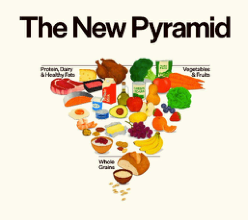
The updated guidelines come with a new visual that looks like a return to the food pyramid, and the focus is clear. Build your meals around whole, nutrient-dense foods rather than ultra-processed foods. That means prioritizing protein at meals, including foods like eggs, poultry, seafood, meat, beans, and dairy. It also brings full-fat dairy back into the conversation, provided it does not contain added sugars.
Fruits and vegetables are meant to show up daily, ideally in their whole form. Healthy fats from foods like olive oil, eggs, nuts, seeds, and avocados are encouraged. Whole grains still have a place, but the guidelines are very direct about cutting back on refined and packaged carbohydrates that tend to crowd out better options.
Where the guidelines really get honest is in what they suggest limiting. Highly processed foods, sugary drinks, packaged snacks, and foods loaded with added sugars and artificial ingredients are called out as major contributors to chronic disease. The message is not about perfection. It is about direction.
One of the biggest mistakes people make when they read nutrition guidelines is trying to fix everything at once. That usually lasts about a week before life gets busy and old habits take over. What works better is picking one small thing to focus on for the week.
Maybe it is adding protein in the morning so you are not playing catch-up with hunger later in the day. Maybe it is adding an extra cup of vegetables to one meal. Maybe it is swapping one ultra-processed snack for something more filling. Small changes like these are easier to stick with, and they add up over time.
This is also how I approach coaching. We do not try to overhaul your entire diet in one shot. We focus on one realistic habit at a time, build consistency, and then layer from there. The goal is not perfection. The goal is creating habits that actually fit your life.
The new 2025 to 2030 Dietary Guidelines for Americans provide direction. What we do with that information, one small step at a time, is what creates lasting change.
Source: Dietary Guidelines for Americans, 2025–2030. U.S. Departments of Agriculture and Health and Human Services. Released January 2026. dietaryguidelines.gov realfood.gov
Angela Walstad may be reached at 330 977 1876 via text or angela@habitsforlifewellness.com.
More information is available at www.habitsforlifewellness.com.
Angela Walstad has over 15 years of experience in the health and wellness field and holds degrees in Psychology and Sport, Exercise, and Performance Psychology. She is a Certified Master Health Coach through Precision Nutrition and focuses on the behavior and psychology behind sustainable health change, helping people move beyond quick fixes to habits that support long term results.