





Architecture, engineering and construction firms from across Northeast Ohio combined creativity, engineering and community service at the 2026 CANstruction Cleveland–Akron competition, transforming thousands of cans of food into elaborate sculptures inspired by mythology and legend.
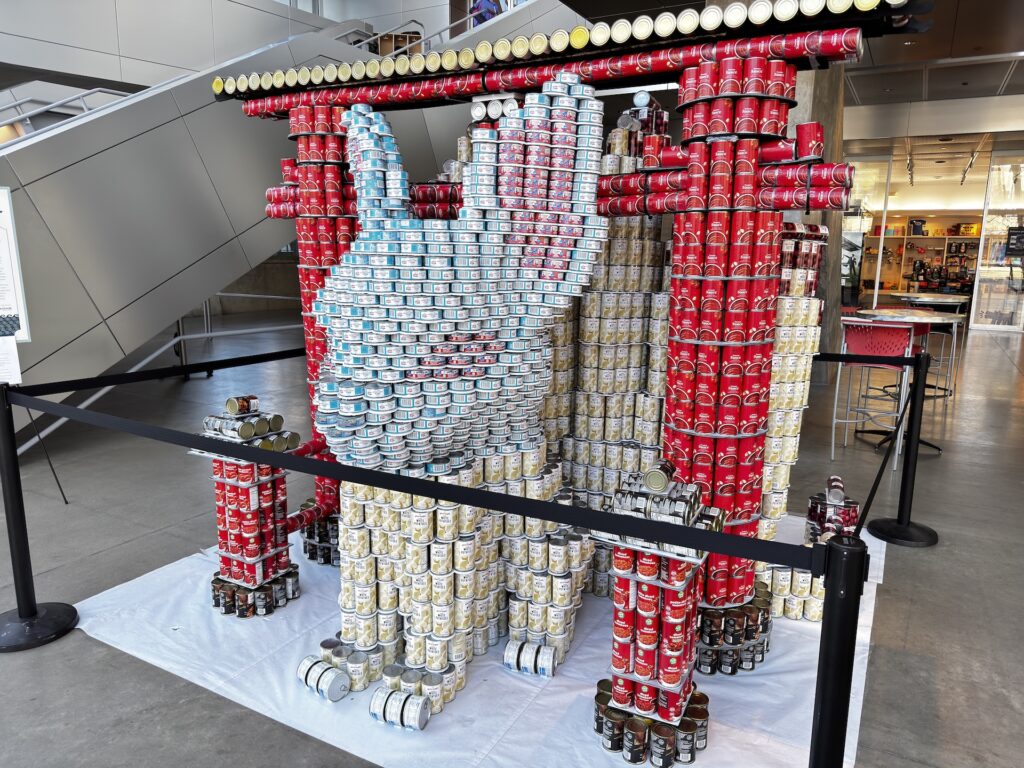
CANstruction is a design competition in which teams build large-scale sculptures entirely from donated canned goods and other nonperishable foods. Each team is given 10 feet of space to create its structure, carefully engineering stacks of cans into stable designs without permanent supports. Past teams have created animals, cartoon characters and pop-culture icons.
Visitors were encouraged to watch teams construct the sculptures during the live build. The completed displays will remain on view through March 22. After the exhibition concludes, the structures will be dismantled and all food will be donated to the Akron-Canton Regional Foodbank and the Greater Cleveland Food Bank. Proceeds from the event also benefit both organizations.
Across the seven sculptures on display, teams used 28,268 cans of food, along with additional nonperishable items such as mashed potatoes and seasoning packets.
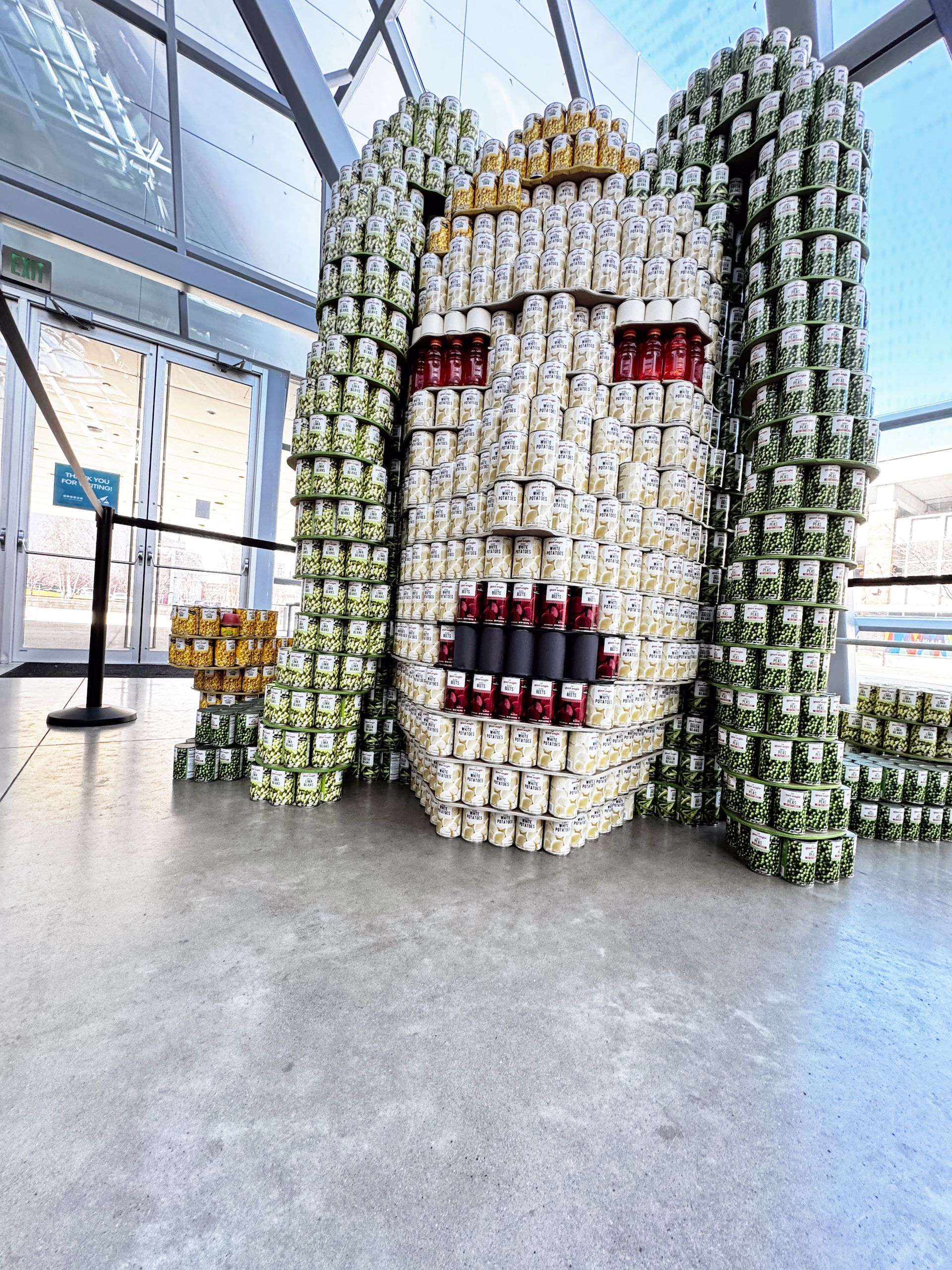
The largest sculpture was created by Onyx Creative, whose design “Medusa, Re-CAN-structed: A Legend Preserved One Can at a Time” used 8,160 cans. The sculpture’s striking face was constructed from potato products, while rows of canned vegetables formed Medusa’s twisting hair. According to the team’s poster, the serpentine locks were built using sweet peas, corn and lima beans, creating “a tangle of snakes that winds through the structure.”
The team wrote that their design transforms Medusa from a symbol of fear into one of compassion and generosity. The poster explains that “every can in her structure becomes a step toward ending hunger,” turning the mythical figure into a guardian of nourishment rather than a monster.
Another large display came from CESO, whose sculpture “CANsune” used 6,055 cans and drew inspiration from the kitsune, the legendary nine-tailed fox from Japanese folklore. The sculpture depicts the fox beneath a torii gate, a symbol commonly associated with sacred spaces in Japanese culture.
The team’s poster described the story behind the design: “In our tale, the kitsune collects the food left by travelers and stacks the cans for those in need.” The foods used in the sculpture — including potatoes, carrots, corn, tuna and chicken in broth — were chosen intentionally as ingredients that could later be used to prepare comforting meals for families.
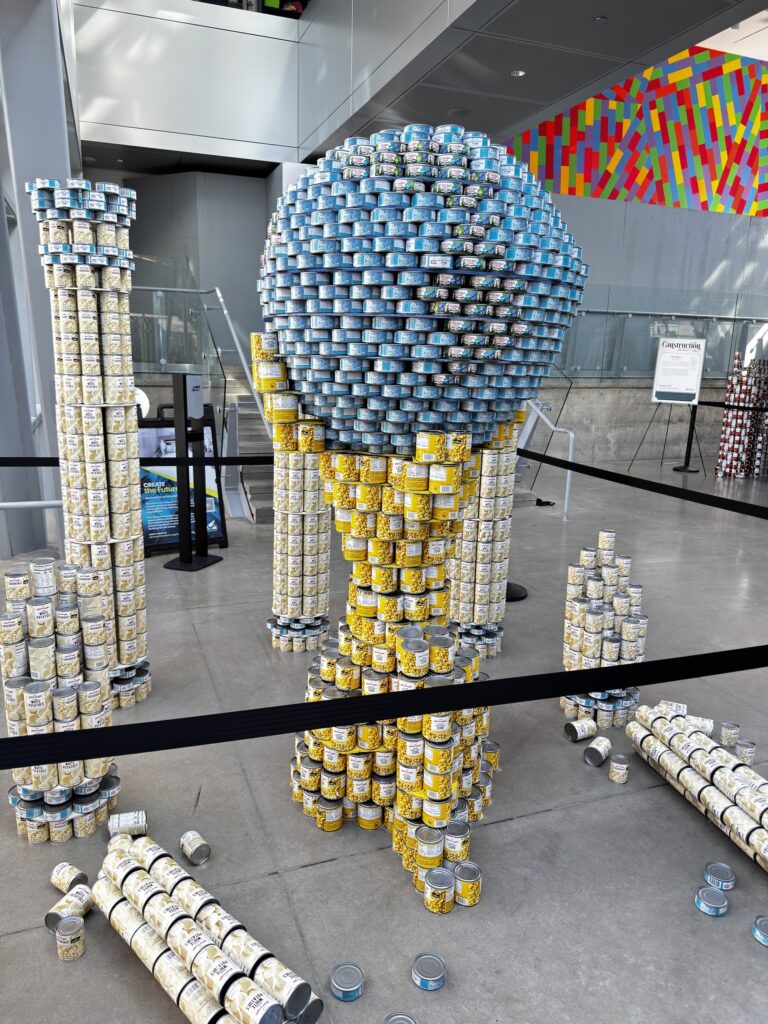
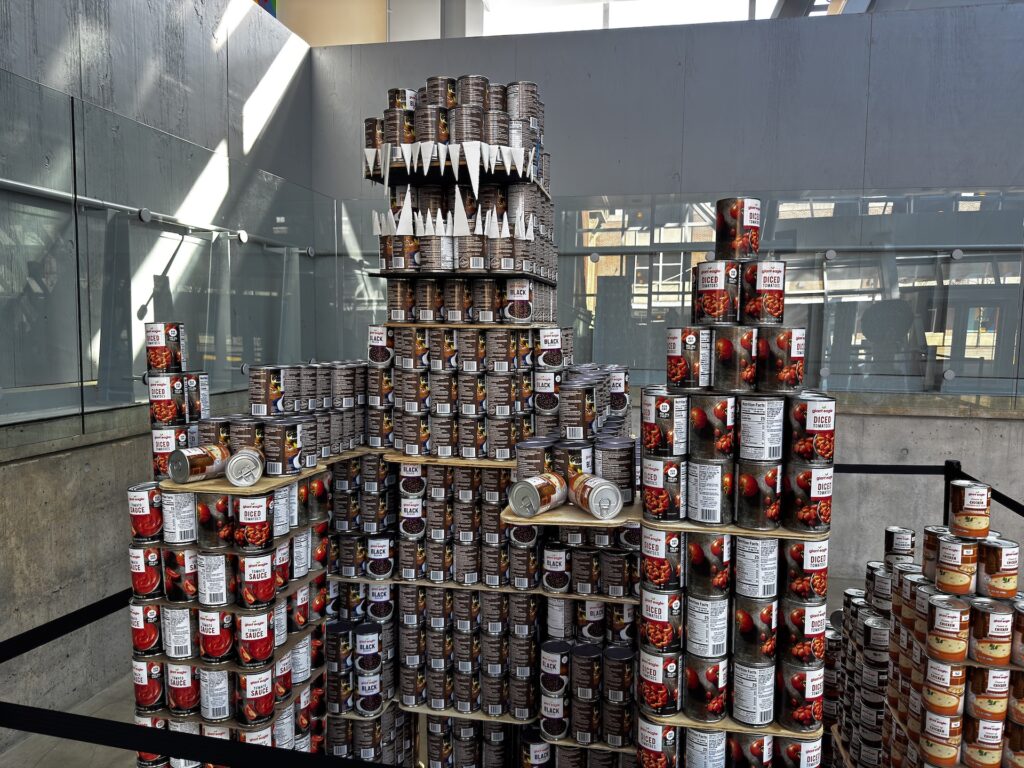
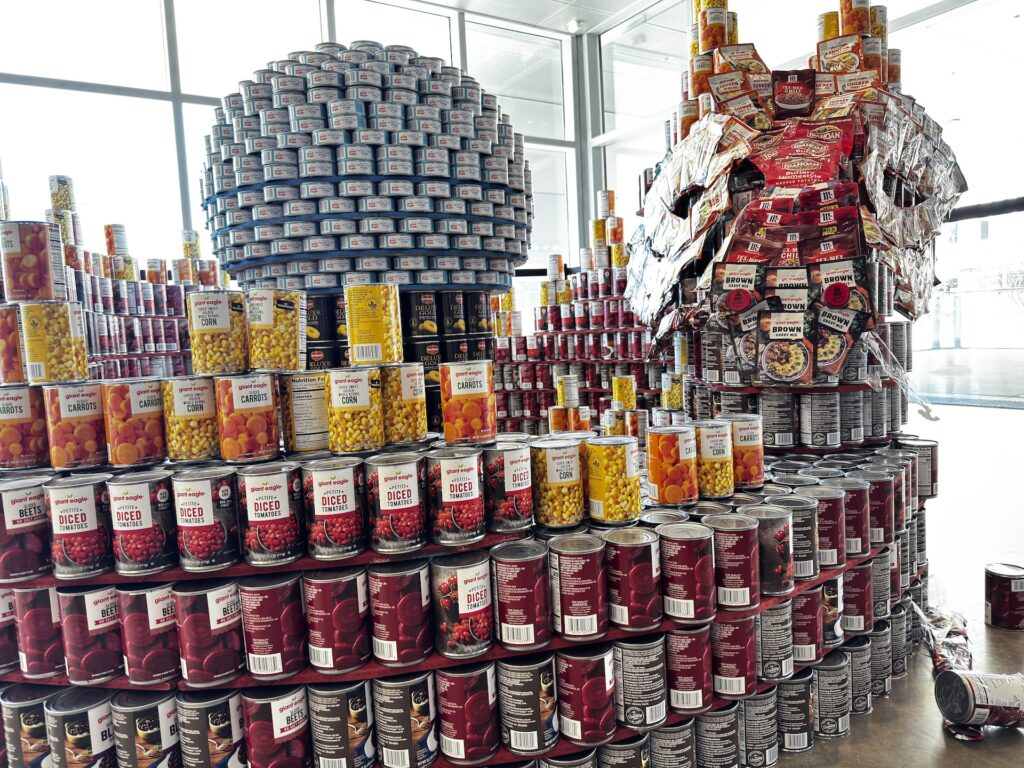
VOCON created “The Dragon and the Pearl,” using 5,400 cans along with more than 100 packets of spices. The sculpture was inspired by a Chinese legend in which a boy discovers a magical pearl capable of multiplying food and prosperity.
According to the team’s poster, “the pearl’s gift is abundance — the ability to multiply nourishment and prosperity.” In the legend, the boy swallows the pearl to protect it from a greedy emperor and it transformed into a dragon whose power guards its blessings. The sculpture incorporated foods such as black beans, sliced beets, diced tomatoes, carrots, corn, pineapple and tuna, representing the nourishment the pearl provides.
LDA Architects constructed “CAN-zilla,” using 3,034 cans and 50 packages of mashed potatoes. The design featured the towering monster rising above a city skyline built from stacked cans. The team used 1,954 cans of black beans in reference to 1954, the year Godzilla first appeared on film.
The team’s poster described the creature as a defender rather than a destroyer: “This titan doesn’t crush cities — it helps feed them.”
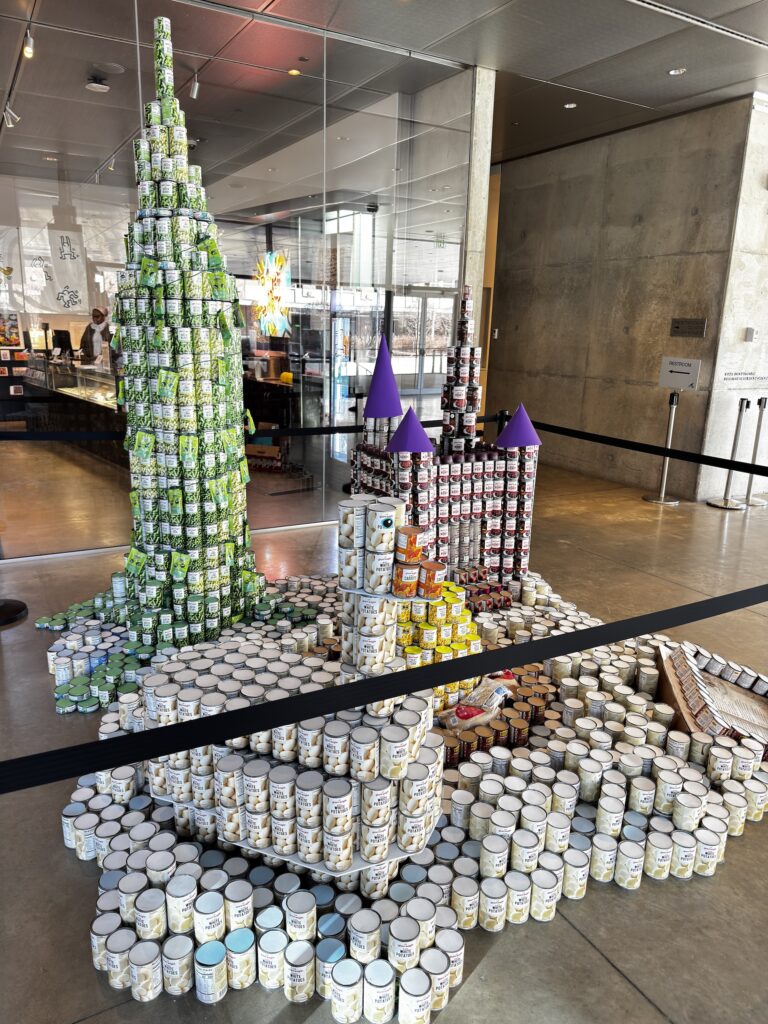
Inspired by Jack and the Beanstalk, AVID Architects created “Feed-Fi-Fo-Fum,” using 2,860 cans. The sculpture shows a beanstalk climbing from the ground into the clouds, leading to a castle built from canned goods. The display also included a golden egg and goose, referencing the treasures Jack finds in the giant’s castle.
The team’s poster explained the symbolism: “Just like Jack’s beanstalk, a small beginning can grow into something towering when we work together.”
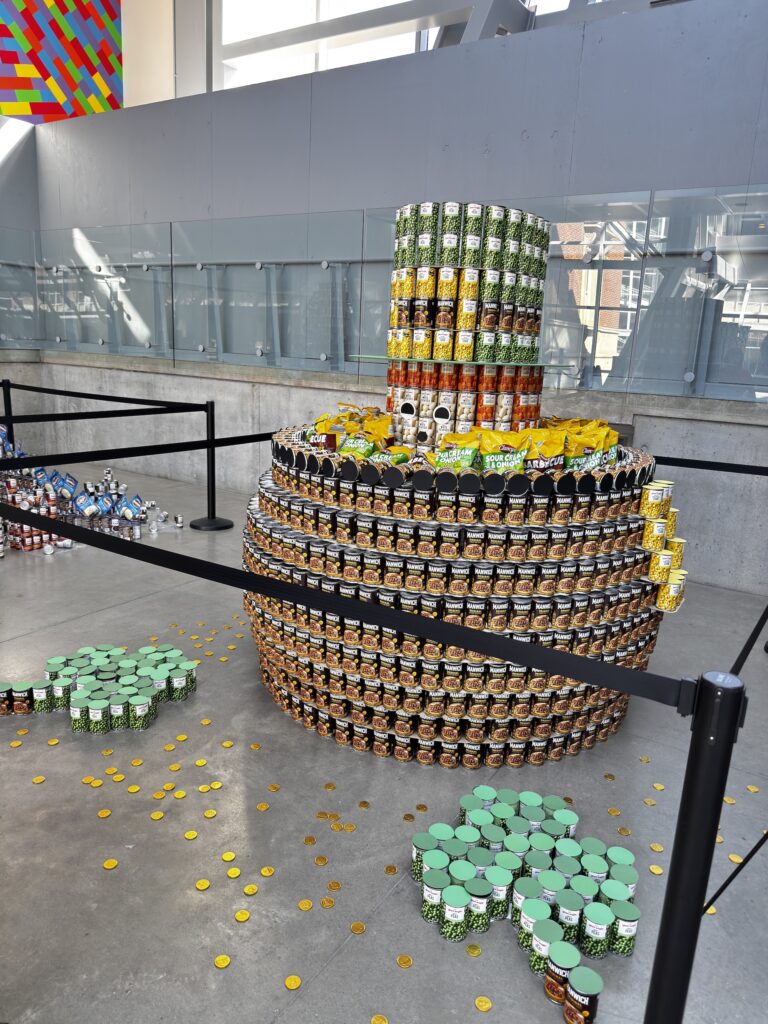
Sol Harris Day Architecture designed “Magically Delicious,” a St. Patrick’s Day-inspired sculpture built from 2,172 cans. Drawing from Irish folklore about the leprechaun guarding a pot of gold at the end of the rainbow, the sculpture used colorful pantry staples including sweet peas, sliced carrots, corn and whole white potatoes.
Their poster noted that while legends speak of hidden gold, the true treasure lies in helping others. “The real magic isn’t the gold — it’s the food we can share.”
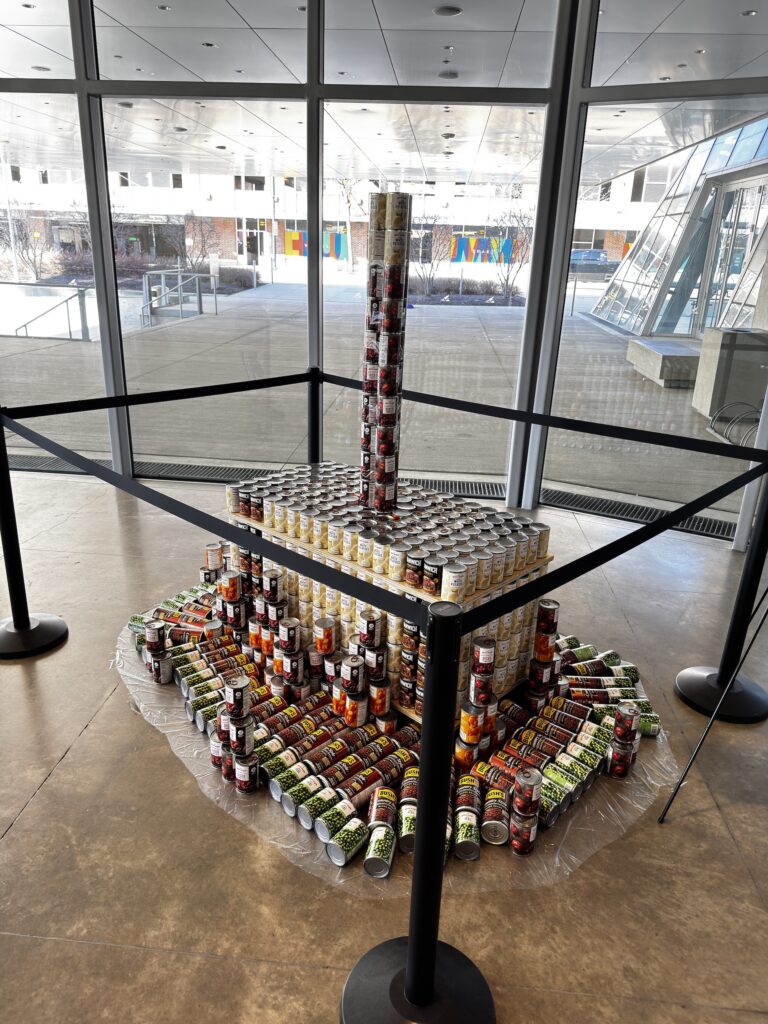
The smallest display came from Turner Construction Company, whose sculpture “Mjölnir” recreated the hammer of Thor, the Norse god of thunder. The structure used 587 cans and pantry staples including baked beans, diced tomatoes, sweet peas and sliced carrots.
The team linked the hammer’s mythological symbolism to the event’s mission, writing that “when communities come together, even the smallest offerings can create something powerful.”
While the sculptures highlight the creativity and engineering skill of the participating firms, their ultimate purpose is to support families facing food insecurity.
Once the exhibition concludes, the structures will be dismantled and the thousands of cans will be distributed through the Akron-Canton Regional Foodbank and the Greater Cleveland Food Bank, helping supply pantries and meal programs across Northeast Ohio.
Two local food pantries that benefit from donations distributed through the Akron-Canton Regional Foodbank are the Nelson Garrettsville Community Cupboard and the Mantua 4Cs Food Pantry. The Nelson Garrettsville Community Cupboard serves residents of the James A. Garfield Local School District, while the Mantua 4Cs pantry supports families in the Crestwood Local School District area. Both organizations rely on partnerships with the regional food bank to provide groceries and essential pantry items to families in need in our communities.