



PART I – The Disappearance of Local Family Farms
Northern Portage County is considered a rural region, characterized by a patchwork of family farms that have remained rooted over several generations. But that’s how it appears to the casual observer. Many family farmers who remain are struggling to hold onto the land and lifestyle they once took for granted.
Between 1950 and 2017, Portage County lost more than 60% of its farmland, which dropped from over 225,000 acres to just under 86,000. By 2022, the county’s farmland acreage stood at 85,762 acres. Statewide since 2002, an estimated 1 million acres of Ohio’s farmland have been converted to other uses, notably housing developments, strip malls and industrial sites.
One by one, historic family farms and their distinctive barns have disappeared from the local landscape. Along with them, we are losing a proud heritage defined by true grit, family and community ties, and a deep relationship with land and livestock.
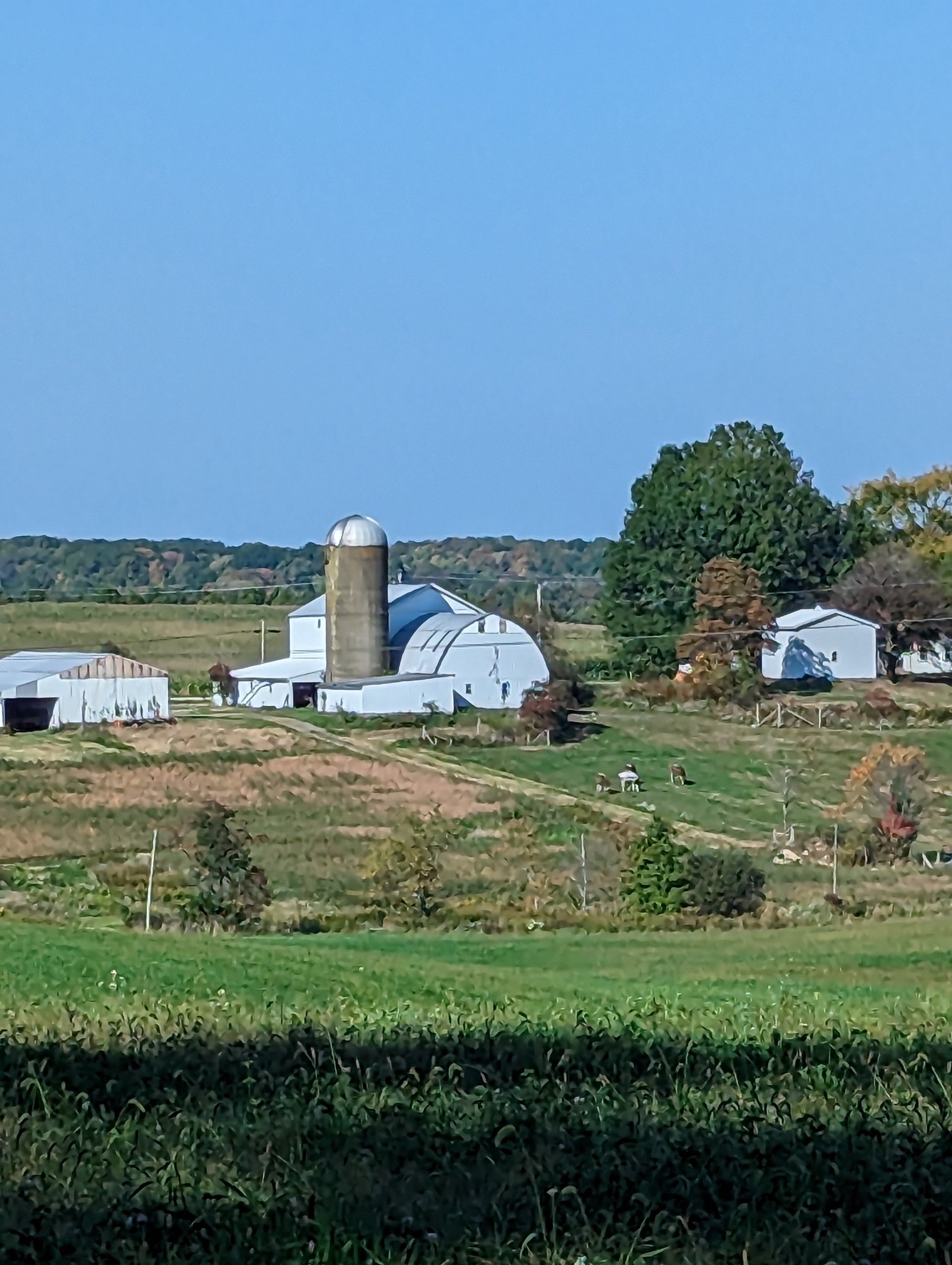
One such farm in Freedom Township is the 125-acre Winchell Family Farm, which has been an agricultural enterprise since it was carved from the virgin forest as part of a Connecticut Western Reserve homestead. David and Polly Winchell are the seventh owners of this historic farm bordering Hiram Township.
Originally from Mantua, Dave Winchell and his siblings grew up on this farm, which their parents — Roger and Virginia — purchased in 1956. It seems only fitting that, 70 years since then — and during the 250-year celebration of our nation’s founding —the Winchells are preserving the history and vitality of this farm for future generations.
Within recent memory, the Winchells operated a thriving dairy farm where Holsteins and Brown Swiss were raised to produce Grade A milk. By 2006, the Winchell family operated the only remaining dairy farm in Freedom Township, milking about 36 cows of their 100-head herd.
Nationwide, there were about 648,000 dairy farms in 1970; 100,000 by 1996; and just 65,000 a decade later. Today, 24,000-25,000 family dairy farms remain in the U.S., as larger dairy operations swallow up the market share. The Winchells’ dairy days are also done; they pulled the plug 15 years ago.
“I loved the dairy industry,” Dave says. “But I got tired of the milk market politics and the manipulation of milk prices. It just didn’t pay to stay in it.”
Now retirement age, David and Polly raise steers for freezer beef in their Civil War-era barn and grow soybeans, wheat and hay in the fields. Beyond the fields is a thick stand of woods that includes the remnants of an old sugar bush that likely supported Garrettsville’s once-thriving maple syruping tradition (the world’s number one maple syrup producer in 1899).
“I believe in agriculture,” Dave says as he recounts all the now-erased barns nearby where he used to stack hay.
When I think of all the farms that used to be around when I was a kid — I could name them all and what their impact was on the local economy — and all the barns that used to be standing, I feel bad about it,” David admits. “Even in downtown Garrettsville, there’s no more Hopkins Mill, no more Paul’s Feed Store. This history needs to be saved, somehow, before it’s all gone from memory.”